
I have the models ready for my first Five Parsecs: Bug Hunt games: three Tau Stealth Suits, four Fire Warriors, Termagants, several smaller crawling bugs and a group of OPR Shadowstalkers. I do not intend to use their original settings. The models are painted, they fit the roles I need, and they give me enough to start building a setting of my own.
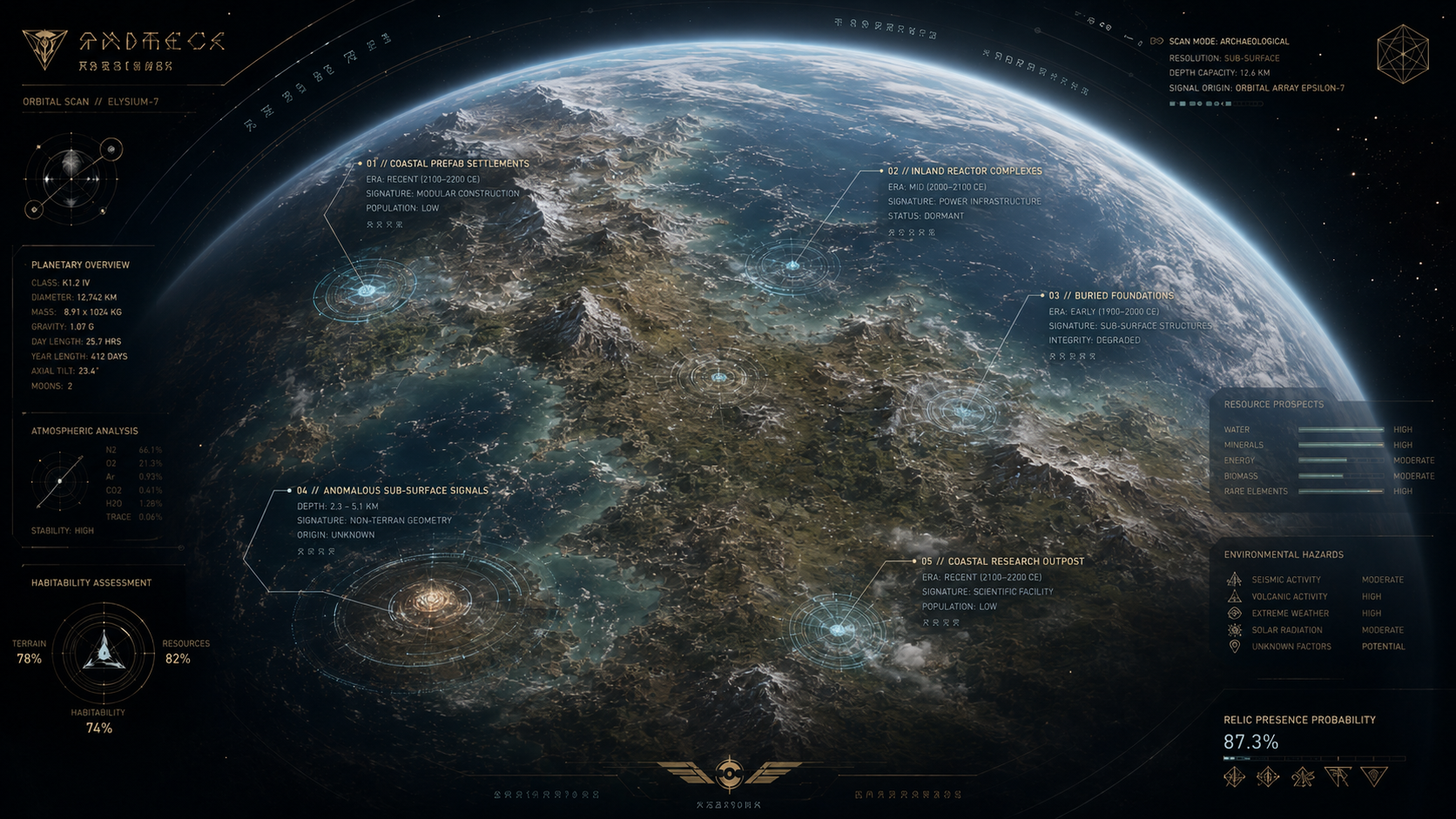
The basic idea is a reconnaissance team arriving on a planet where an earlier settlement has gone quiet. Long-range scans still show power in several locations, but there have been no communications and no confirmed signs of human activity. The team has been sent down to find out what remains and whether anything can be recovered.
The Reconnaissance Team
The three Stealth Suits become advanced reconnaissance exosuits built for hazardous environments, rough terrain and operations inside damaged industrial sites. They are compact enough to enter buildings, but protected well enough to deal with local wildlife and failing infrastructure. These three will be the main characters of the campaign.
The four Fire Warriors become two small infantry teams supporting them. They can secure entrances, hold open ground and cover the exosuits while they investigate a site. This gives the force a simple internal structure: the infantry provides security while the exosuits take on the more difficult work. It also keeps the campaign focused on a small number of characters without making the support troops irrelevant.
The Planet
The planet already has several settlements built from prefabricated modules. Workshops, storage buildings, habitation blocks, repair bays and utility structures were assembled using the same standard parts, giving the sites a practical and repetitive appearance. These were working settlements designed to be expanded and repaired using equipment shipped in from elsewhere.
They have been empty for a long time. Some buildings have collapsed while others remain largely intact, with isolated power and environmental systems still operating. These surviving power sources were visible from orbit and gave the reconnaissance team a reason to investigate.
The settlements look as though work stopped and never resumed. A vehicle might remain in a repair bay with its engine suspended from chains and one wheel removed. Tools and parts still sit on a nearby bench. Crates were placed in storage but never catalogued, while machinery was opened for repairs and left incomplete. Some systems were shut down properly; others continued operating until maintenance failures caught up with them.
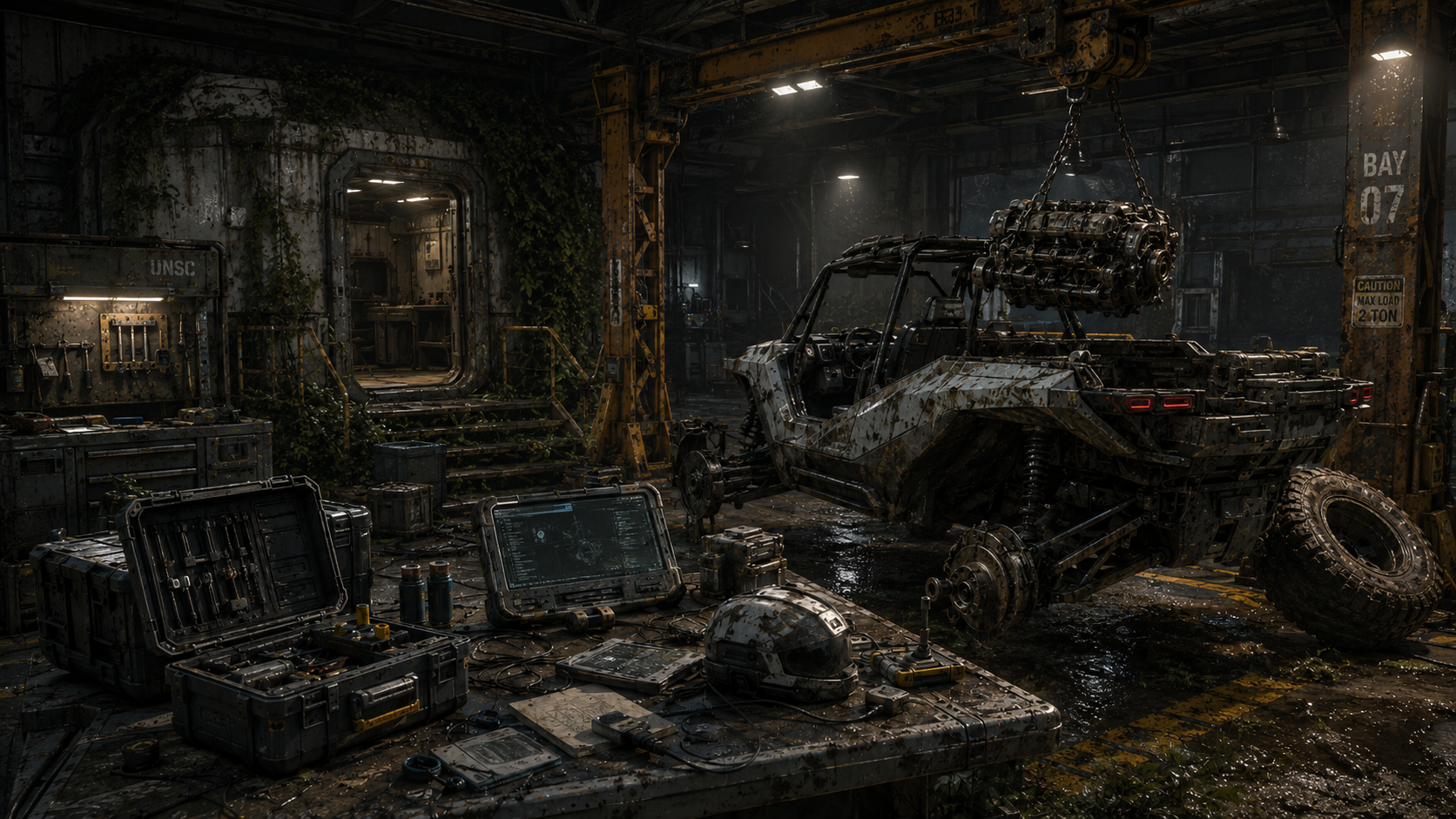
The overall impression is that the inhabitants expected to return to their work. Something prevented that from happening.
What Still Works
Enough of the colony remains active to make exploration dangerous. Emergency lights may switch on when a door is opened, ventilation systems can restart when power is restored, and maintenance terminals continue recording faults that nobody has checked in years. Security systems may still recognise old access codes while treating the reconnaissance team as intruders.
This gives me hazards that come directly from the environment. A door can seal behind the team, a repair arm can start moving without warning, or a damaged power relay can fail while someone is inside a facility. Most of the technology was built for ordinary colonial work, which makes these dangers easier to place and understand. The buildings have a purpose, and the risks come from systems continuing to perform that purpose long after the colony stopped functioning.
The Native Creatures
The abandoned settlements have been taken over by several forms of native life. The most common are represented by my Termagants. They are fast, aggressive animals that hunt around the ruins and use the empty buildings as shelter. Some gather near warm machinery or damaged power systems, while others establish nests in workshops, storage areas and underground service spaces.
I also have several smaller crawling bugs, which I think came from the Five Parsecs STL range. These can represent swarm creatures, scavengers or immature forms found around larger nests. They can move through vents, gather around organic remains or appear when a sealed room is opened. They are less dangerous individually, but become a serious problem when they appear in numbers or block the team’s route through a facility.
The wildlife gives me several types of encounters without needing to add more models. The team may have to cross the hunting ground of the larger creatures, clear crawling bugs from a power station or recover equipment from a building that has become a nesting site. Some objectives may require the team to hold a position, reach a terminal or withdraw before more creatures arrive.
I have not decided whether the native life had anything to do with the settlement being abandoned. The creatures may have become more aggressive after the people disappeared, or they may simply be taking advantage of empty structures and failing machinery.
The Nullborn
The OPR Shadowstalkers will represent the Nullborn. They are rarer than the ordinary wildlife and should feel like something the reconnaissance team was not expecting to find.
Their exact origin is still open. They may be native organisms changed by something beneath the surface, creatures associated with the older structures or evidence that another force has interfered with the planet’s ecosystem. Their presence should raise questions rather than immediately provide answers.
I do not intend to use them as common enemies. Signs of a Nullborn presence may appear before the creatures themselves: damaged wildlife, unusual tracks, interference with sensors or sections of a facility that other animals avoid. When they eventually appear, they should mark a change in the campaign and suggest that the abandoned settlements are only part of what is happening on the planet.
What Happened to the Colony
I have left the fate of the colony open because the reconnaissance team begins with the same uncertainty. There may have been an evacuation, a communications failure or an accident elsewhere on the planet. The settlers may have discovered something that changed their plans, or some of them may still be alive at another location.
The answer can emerge through the campaign. A damaged terminal may contain part of a message, while a repair log could show when work stopped. Survey records may point towards another site, and a vehicle prepared for a long journey could suggest where the inhabitants intended to go. None of these clues needs to explain everything immediately. Each one only needs to provide enough information to justify another expedition.
Something Older
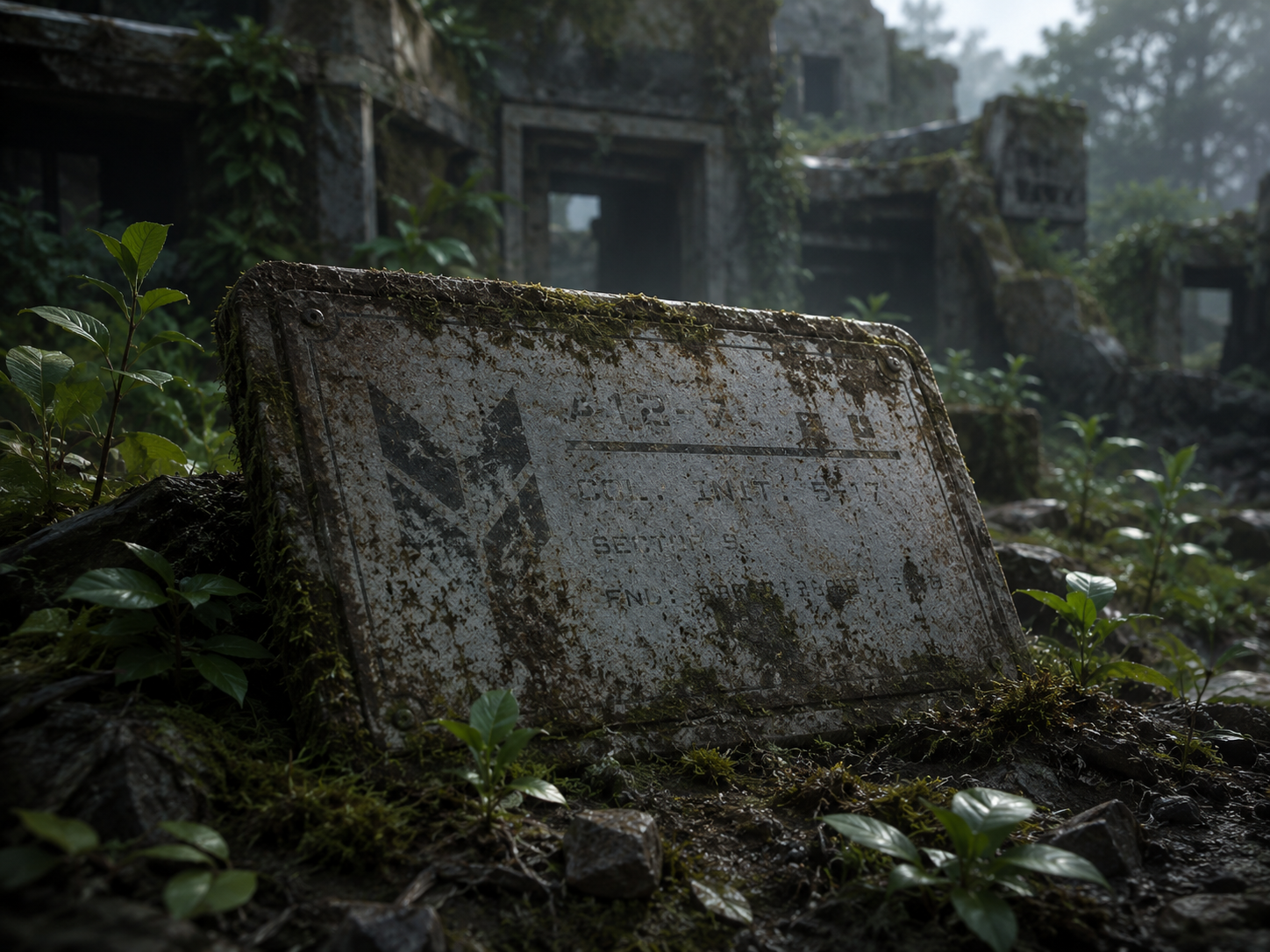
There are also signs that the colony was not the first advanced presence on the planet. Orbital scans show areas where the landscape does not match the surrounding geology, suggesting that sections of the surface were surveyed or altered before the human settlements were built. The colonists may have found evidence of this and begun investigating it themselves.
That part of the setting can remain in the background during the opening games. I do not need a large ancient ruin on the first table. A strange scan result, an unusual foundation beneath a workshop or a reference in an old survey file is enough to introduce the idea.
It also gives me room to add more of my existing models later. The Aeldari can become an advanced posthuman survey group with their own interest in the planet. Cultists can represent scavengers, survivors or members of another expedition. They only need to enter the campaign when the story reaches them.
The Starting Area
The opening area can remain small: one abandoned settlement, several nearby facilities and native creatures moving through the ruins. That gives me enough material for several games without requiring a complete planetary history.
Each location can add another piece to the setting. A damaged vehicle, a failed power station, a missing survey team or equipment prepared for an unfinished job can all point towards what happened. The setting will grow from the places the team explores and the evidence they recover.
For now, the reconnaissance team has arrived, the colony is silent, and there is movement beyond the perimeter.